LICENCED & LICENCE FREE LONG RANGE WALKIE TALKIE

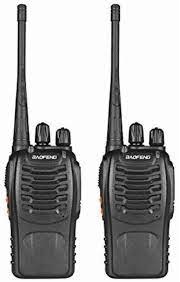
- Model No: MOTO
- Category: CCTV Security Systems and Surveillance Equipment
- Keywords: Here are some keywords related to Walkie Talkies: 1. Two-way radio 2. Handheld radio 3. Portable radio 4. Communication device 5. Wireless radio 6. Mobile radio 7. Radio transceiver 8. Walkie-talkie set 9. Portable communication 10. Two-way communication 11. Handheld transmitter 12. Radio communication device 13. Wireless communication 14. Mobile communication 15. Portable two-way radio
- Manufacturer Name: MOTOROLA
- Packing size: STANDARD
- Price: ₹2,500
Description
A walkie-talkie phone, also known as a two-way radio or handheld transceiver, is a portable communication device that allows users to transmit and receive audio signals over a short to medium range. Walkie-talkie phones have been widely used for decades in various industries, including construction, manufacturing, hospitality, and public safety. Design and Features A typical walkie-talkie phone consists of a compact handheld unit with a microphone, speaker, and antenna. The device is usually powered by batteries, which can be rechargeable or disposable. Some walkie-talkie phones may also have additional features, such as: - LCD display: Shows the device's status, including the channel number, signal strength, and battery life.- Keypad: Allows users to enter channel numbers, send text messages, or access other features.- Emergency button: Activates an emergency alert or sends a distress signal to other users.- Noise reduction: Helps to filter out background noise and improve audio clarity. How it Works Walkie-talkie phones operate on a simple principle: they transmit and receive radio signals over a specific frequency range. Here's a step-by-step explanation of the process: 1. Transmission: When a user speaks into the microphone, their voice is converted into an electrical signal.2. Modulation: The electrical signal is then modulated onto a carrier wave, which is a high-frequency radio signal.3. Transmission: The modulated carrier wave is transmitted through the antenna as a radio signal.4. Reception: The radio signal is received by another walkie-talkie phone or a base station, which demodulates the signal to extract the original audio.5. Playback: The extracted audio is then played back through the speaker, allowing the recipient to hear the original message. Types of Walkie-Talkie Phones There are several types of walkie-talkie phones available, including: - Analog walkie-talkies: Use analog signals to transmit and receive audio.- Digital walkie-talkies: Use digital signals to transmit and receive audio, offering improved clarity and security.- License-free walkie-talkies: Operate on frequencies that do not require a license to use, such as the Family Radio Service (FRS) or General Mobile Radio Service (GMRS) frequencies.- Trunked walkie-talkies: Use a trunked radio system, which allows multiple users to share a limited number of frequencies. Applications and Industries Walkie-talkie phones are used in a wide range of industries and applications, including: - Construction: For communication between workers on a construction site.- Manufacturing: For communication between workers on a production line.- Hospitality: For communication between staff in hotels, restaurants, and other service industries.- Public safety: For communication between emergency responders, such as police, firefighters, and paramedics.- Events: For communication between staff and volunteers at events, such as festivals, concerts, and sporting events. Advantages and Benefits Walkie-talkie phones offer several advantages and benefits, including: - Instant communication: Allows users to communicate instantly with each other, without the need for cellular networks or landlines.- Reliability: Offers reliable communication, even in areas with limited or no cellular coverage.- Durability: Walkie-talkie phones are often designed to be rugged and durable, withstanding rough handling and harsh environments.- Cost-effective: Can be more cost-effective than cellular phones or other communication devices, especially for short-range communication. Conclusion Walkie-talkie phones are a simple, reliable, and cost-effective way to communicate over short to medium ranges. They are widely used in various industries and applications, offering instant communication, reliability, durability, and cost-effectiveness.